Sewing a Simple Cutlery Wrap for Lunches Away from Home
A washable fabric roll keeps everyday cutlery together without adding another rigid container to your bag.
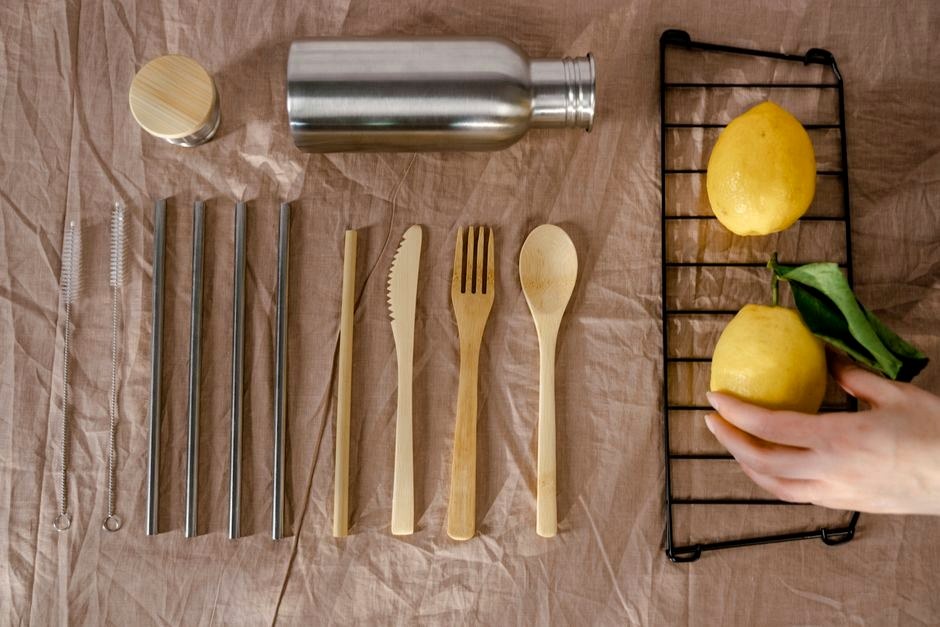
A cutlery wrap is one of those small sewing projects that becomes useful immediately. It keeps a fork, spoon, knife and reusable straw together, protects the inside of a bag from sharp edges, and can be washed with ordinary kitchen towels.
You do not need a pattern. A rectangle of medium-weight cotton, a second smaller rectangle for the pocket, and a length of tape or fabric tie are enough.
Choose fabric that can be washed often
Tea-towel cotton, lightweight canvas or sturdy linen all work well. Avoid anything too thick to fold or too delicate to handle food marks. If you are using a scrap, wash and dry it first so the finished wrap does not shrink later.
Lay your usual cutlery on the fabric before cutting. The outer piece should be a little taller than the longest item and wide enough to roll around the full set. A practical starting size is about 32 by 28 centimetres, but the dimensions are flexible.
Make the pocket
Cut a second piece about two-thirds the height of the outer rectangle. Hem its top edge, then place it on the lower half of the main piece with the right sides facing out. Stitch around the sides and bottom, leaving the top open.
Now place the utensils on the pocket and mark simple channels between them. Sew vertical lines from the pocket edge down to the bottom seam. The channels do not have to be perfectly equal; a spoon needs more room than a narrow straw.
Add a tie before finishing the edges
Fold a length of cotton tape in half and stitch the fold to one side of the wrap. Position it roughly at the middle so that, once the fabric is rolled, the two loose ends can circle the bundle and tie in front.
Finish the outer edges with a narrow double fold or bias tape. If your fabric frays heavily, a zigzag stitch around the raw edges before hemming makes the project easier to handle.
Use it as part of the lunch routine
After washing, keep the clean wrap beside lunch boxes rather than in the sewing drawer. Fill it with the same everyday set each time. A small cloth napkin can be rolled inside too, and the tie will usually accommodate the extra layer.
The wrap is also useful for picnics and train journeys because it changes shape around what you pack. Unlike a hard case, it takes almost no room when empty. If the first version ends up slightly crooked, that is not a flaw worth fixing. The point is a durable object that gets used often, washed without fuss, and gradually softens with time.